

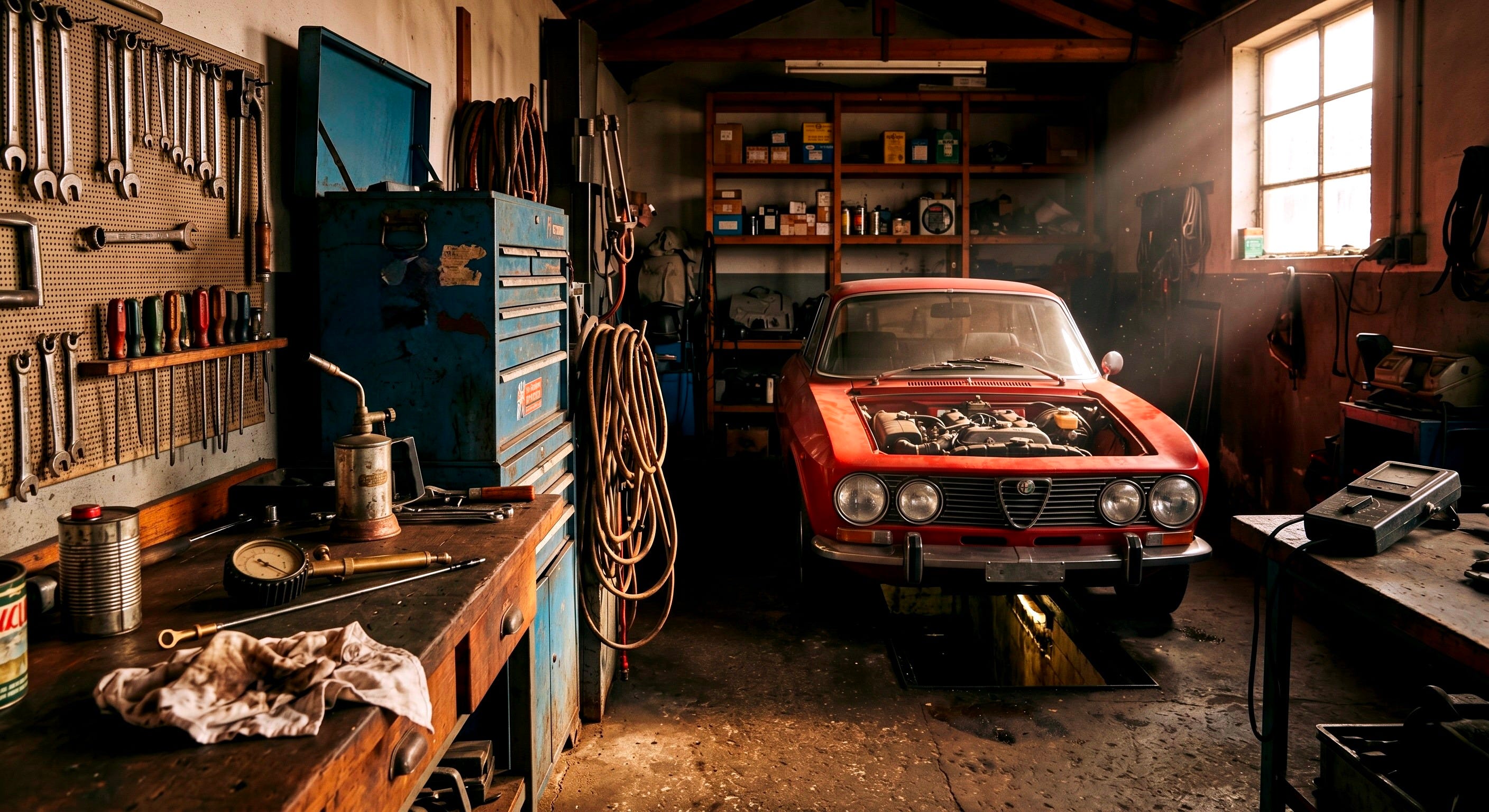
Once a year, most of us ask our cars to do something they rarely do the rest of the time. Carry everything we love, a very long way, without fail. The season of long drives is upon us. And most breakdowns, it turns out, are not surprises. The warning signs were there, sometimes for days, and the driver did not look. Thirty minutes the day before you leave is what separates a story you tell at dinner from a phone call to a tow truck.
The night before matters more than the morning of. Finding a problem the night before means you have time to fix it. Finding it on the day means changing plans, taking risks, or pushing on anyway and hoping.
What follows is the basic checklist one should run through before any drive of real distance. Ten things, in roughly the right order. None of them are too complicated.
1. Tyre pressure
Check when the tyres are cold. That means before you have driven anywhere, not after a warm-up run to the petrol station. The correct pressure is on the door jamb sticker, not the number printed on the sidewall. The sidewall figure is the maximum the tyre can hold, not the recommended.
All four tyres. And the spare. A flat spare is the same as no spare when you are four hundred kilometres from home.
If any tyre is more than five psi below the door sticker figure, or you are losing pressure between checks, you have a slow leak. A leak that is small today becomes a blowout tomorrow.
2. Tread depth and sidewalls
Tyres should be replaced when tread is worn to two millimetres, but for a long drive in any weather, aim for three or more. The easiest check is a Euro coin pressed gold-side down into the tread. If you can see the entire gold border, you are below three millimetres.
While you are down there, run a hand around each sidewall. You are feeling for bulges, deep cracks, or anything embedded. The small nail you notice today is annoying. The same nail at one hundred and thirty kilometres an hour is something else entirely.
A bulge in a sidewall means the tyre is failing internally. Replace it before the trip. Cracks deeper than surface scratches, or anything sharp lodged in the rubber, need a workshop visit.
3. Engine oil
Park on level ground with the engine cool. At least fifteen minutes after you last drove it, not pulled over with the engine still ticking.
Pull the dipstick, wipe it clean, push it fully back in, and pull it out again. Every dipstick has markings of some kind: pinholes, letters, crosshatching. The oil level should sit between them.
The level is only half the story. Healthy oil is brown or black with a consistent feel. A milky appearance means coolant is leaking into the engine. Thick, sludgy oil has been left far past its change interval. Metal particles in the oil can indicate internal damage.
Do not start a long journey on questionable oil. It is the one fluid that keeps everything else from destroying itself.
4. The other fluids
Four reservoirs under the bonnet matter for a long drive. Each has minimum and maximum lines marked on the side.
Coolant. Never open the cap when the engine is hot. Check the level when cold. Low coolant means either a leak or an overheating engine waiting to happen.
Brake fluid. If it is low, you could have worn pads or a leak somewhere in the system. Neither is something to discover when you need to stop hard.
Power steering fluid. Many newer cars use electric steering and do not have a reservoir. If yours does, keep it topped up.
Washer fluid. Fill it completely. You will use more than you expect on a long drive, especially following trucks on dusty roads. Running out of washer fluid in heavy grime is not just inconvenient. It is dangerous.
5. Brakes
On many cars you can see the pads through the wheel spokes, and turning the steering to full lock brings the front ones into view. Look at the friction material on the pad. If it is worn down to a few millimetres, it is time to replace them. Beyond looking, listen and feel on your last drive before the trip.
Squealing under light braking means worn pads. Grinding means the pads are gone and you are damaging the disc. A soft pedal suggests air in the brake fluid. The car pulling left or right under braking indicates uneven wear.
Any of those signs, and you stop at a workshop before you stop anywhere else. Brakes are not the system to gamble on when you are planning to cover distance.
6. Lights
Park facing a wall or a garage door at dusk. Turn on the headlights, then high beams, then fog lights if you have them. Walk around and check.
Both headlights should be the same brightness and colour. If one is dimmer or yellowing, that bulb is failing. Have someone press the brake pedal while you watch from behind. Both brake lights should come on immediately and brightly, if alone backup close to a wall in dim light and use the mirrors to check. Test the indicators left and right, then the hazards. Put the car in reverse with the parking brake on and engine running. Reverse lights should illuminate. Check the number plate light and daytime running lights too.
Any bulb that is out, flickering, or noticeably dimmer than its partner needs immediate replacement. A broken brake light can trigger a police stop, and the fine costs far more than a replacement bulb. In several European countries, you are legally required to carry spare bulbs in the car.
7. Wipers and washers
Lift each blade away from the windscreen and run your finger along the rubber edge. It should feel smooth and flexible, not cracked or hardened. A blade with chunks missing will streak and skip, turning rain into a visibility problem.
Spray the washer fluid and run the wipers through a full cycle. You want a clean sweep every time, across the entire windscreen, with no streaks or chattering. If the wipers skip or judder, new blades cost about ten Euros and take two minutes to install.
Do not forget the rear wiper if you have one. It matters as much when you are reversing in the rain.
8. Battery
Most car batteries last between three and five years. If yours is approaching four years old, get it tested at any auto parts shop. Most will do it for free in five minutes.
Check the terminals for white or blue crusty buildup. That is corrosion eating away at the connection. Clean it off with a wire brush and a baking soda paste. Try wiggling the connections to make sure they are tight.
Slow cranking on cold mornings, dim headlights at idle, struggles to start after the car has sat overnight. All signs the battery is near the end of its life. A dying battery tends to fail without warning, usually at the worst possible moment, late at night, far from home.
9. Belts and hoses
Engine off and cold. Open the bonnet and find the serpentine belt that runs the alternator, power steering pump, and water pump. It should look black, smooth, and properly tensioned. Cracks, fraying, or a glazed shiny surface mean it is near the end.
Squeeze the major coolant hoses gently with your thumb and finger. They should feel firm but flexible, like a fresh bell pepper. Rock-hard or mushy hoses mean the rubber is breaking down internally. Look for visible swelling or bulges.
A snapped belt on the motorway means no alternator, no power steering, and possibly no water pump. That is a tow truck and a wrecked schedule, all preventable with a two-minute visual check.
10. The emergency kit
Build it once, check it annually, carry it always.
Across most of Europe, the legal minimum is a warning triangle, a high-visibility vest, and a first aid kit. The triangle goes in the cabin, not the boot, so you can reach it without standing in the road. The vest must be inside the passenger compartment, also accessible before you step out. In some countries the fine for not having it can reach five hundred Euros. The first aid kit should meet European standard DIN 13164 if you are crossing borders.
Beyond the legal minimums: jumper cables or a portable jump starter, a torch with fresh batteries (or fully charged), a tyre repair kit, a bottle of water, food that does not spoil, and a phone charger that actually works in the car. Check expiry dates on the first aid kit annually. Replace used items immediately, especially in summer heat when storage conditions degrade everything faster.
The road is indifferent. Sometimes smooth, sometimes brutal, never bothered by your schedule. Your job is not to predict every problem. Your job is to remove the ones you can see coming.
Ten checks. Thirty minutes. A couple of days before.
That is when the journey actually begins. Not when you turn the key, but when you decide to be ready for whatever comes next.
The Road & Soul. Cars, cultures, and the road between.