

There is a kind of morning in southern Germany that does not prepare you for what comes later. Grey, unhurried, the light flat and familiar. The motorway doing what motorways do: moving you forward without asking anything of you. I left late morning with Italy somewhere ahead and no urgency, which turned out to be exactly the right disposition for what the road had in mind.
Google had already chosen the fastest, most efficient route as always. I followed it for a while, but in the back of my mind I had a different one.
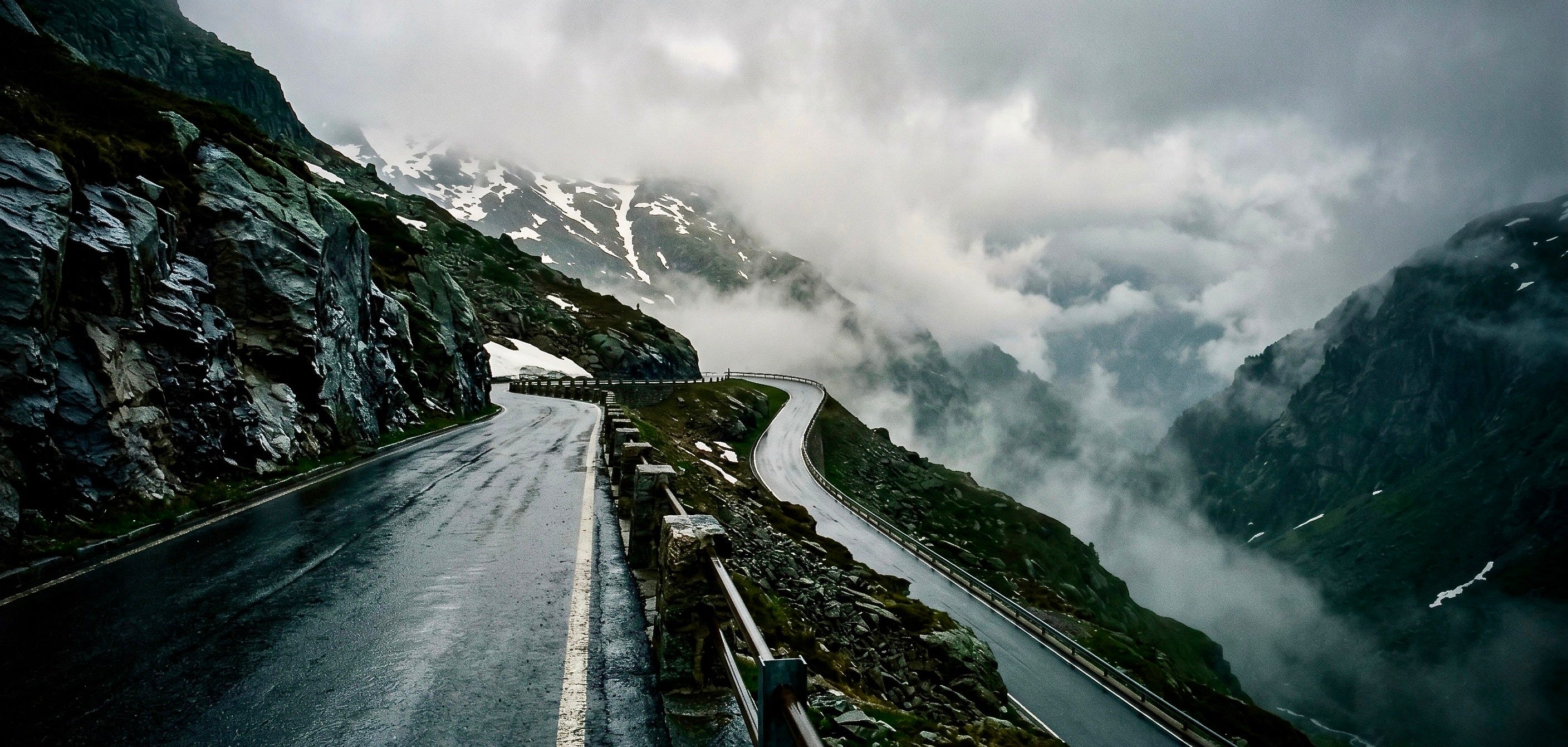
The San Bernardino Pass sits in the Swiss canton of Graubünden, running south through the Alps toward the Italian border at an altitude that makes the lowlands feel like a different country entirely, which in several meaningful ways they are. I had not driven it before. I had seen it on television, in magazine road tests, and now on the digital map, and decided that was sufficient reason. There was no practical justification for going this way. It is longer, less efficient, and with no appointment in the calendar there was time enough to tick it off the list.
The rain started somewhere in the foothills. Light at first, the kind that beads on glass without quite becoming a problem, and then heavier as the road began to climb and the valley walls rose on either side and the clouds came down to meet them. By the time the pass proper began, the cloud was sitting on the road itself. Visibility shortened. The surface was damp and the bends arrived with less warning than they might have in better conditions. Both hands found the wheel without being asked. The heart rate went up. Not fear exactly, but the kind of alertness a road demands when it decides to be serious, the feeling that you are paying attention to something that is paying attention back. The steep drops. The sharp gravelly bends.
It was, in the best possible sense, frightening.
James Bond has driven roads like this, or the version of him that exists in the films has. You think about that on a pass like the San Bernardino, the damp tarmac curling upward into cloud, the rock face on one side and the drop on the other, and you understand why those roads were chosen. Not because they are dramatic for a camera, but because they make you feel genuinely alive. Flat roads and clear skies do not. The sweat is part of it. The slight tightening of the grip. You notice your seating position change, no longer the loose motorway cruise but something more deliberate, more present. These are not unpleasant things.
I stopped in a layby somewhere near the top and got out. The cold hit immediately. Proper cold, the kind that comes off stone and snow and altitude, that raises goosebumps on your arms and makes you breathe differently. The air was completely clean. Below the road, the sound of water, an ice-blue stream running fast over pale rock, the snowmelt doing what it does every spring without ceremony or announcement. Further along the valley wall, a waterfall dropped white against grey granite. I stood there longer than I had planned to.
The descent toward Italy changed everything. The cloud thinned. Then it broke. The sky that appeared was not the tentative grey-blue of a German morning clearing but something more definitive, a Mediterranean blue, the kind that seems to come from a different atmosphere entirely. The temperature rose with each kilometre. The road widened slightly and straightened and the landscape softened. For a few kilometres I was in neither place, just on a road between two worlds, the pass behind me and the lake still ahead.
The old border crossing appeared without warning. A building, a booth, a barrier that no longer came down. Closed up and silent since Schengen made it unnecessary, since the logic of open European borders arrived and quietly ended whatever small theatre used to happen here. Passports checked. Questions asked. The machinery of national edges, now surplus to requirements. I slowed to the signed 15 kilometres an hour. The limit was there for practical reasons, not romantic ones. But the building did something to you regardless, the way certain places ask you to be still for a moment even when all that is actually required is to observe the speed limit and move on. A kind of respect for what the crossing used to mean to people who drove this road before I did.
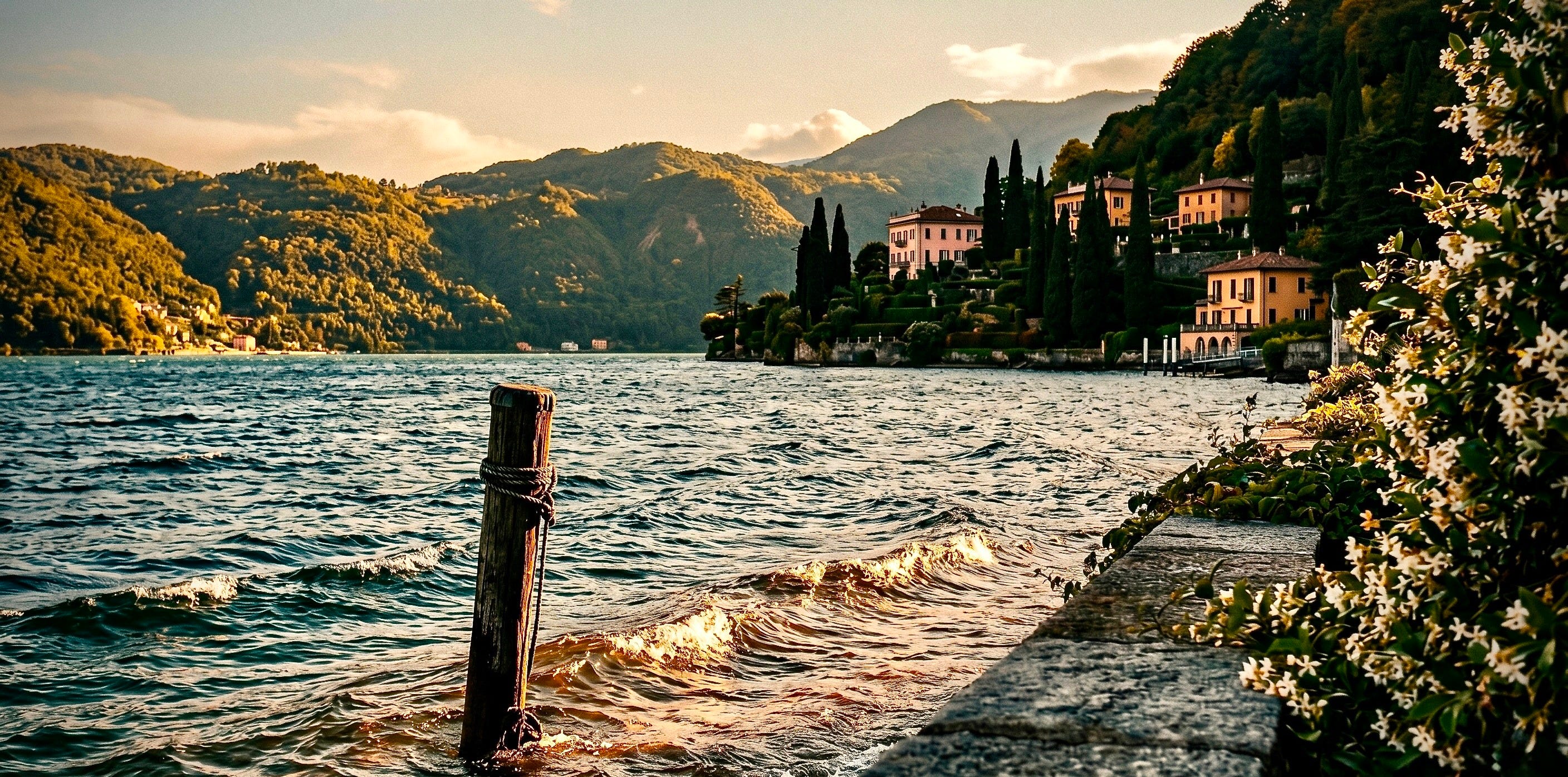
I arrived at Lake Como in the late afternoon, the light going golden over the water, the famous wind of Como already moving across the surface and catching the unwary. And then, through the open window, jasmine. Flowering somewhere along the lakeside, invisible but absolutely present, carried on warm air that belonged entirely to this place and no other. The smell arrived and stayed. It was the moment the journey completed itself.
Cernobbio was waking up for the weekend. Exotic cars parked between ordinary ones. People dressed for somewhere important, milling on narrow pavements, the whole village calibrating itself for the event that was coming. The traffic was heavy and the streets were narrow and none of it mattered at all.
The pass had seen to that. Everything after it felt easy.
The Road & Soul. Cars, cultures, and the road between.